
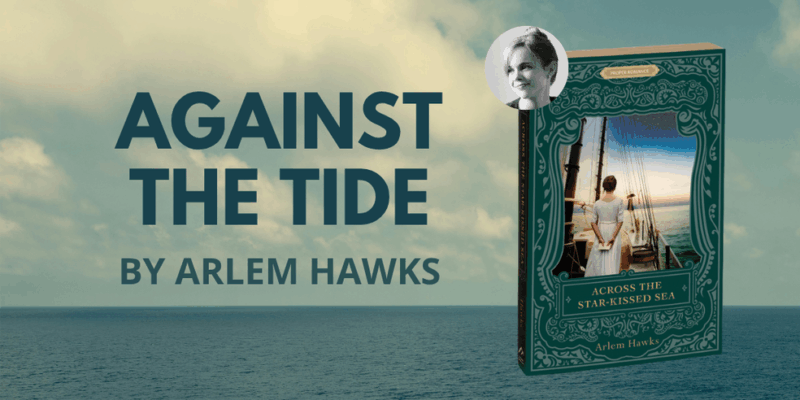
By Arlem Hawks, Author of Across the Star-Kissed Sea
The Georgian era Royal Navy was a man’s world. The harsh conditions, constant worry of storm and battle, and strict laws made it incompatible in the eyes of society to women’s delicate constitutions. Not to mention the distraction a woman could be on a ship full of lonely men. The Admiralty went so far as to make a rule against carrying women His Majesty’s ships. Despite this all, women played a key role in the Georgian navy and not just from afar.
In my newest novel, Across the Star-Kissed Sea, I showcase a few of these situations—captain’s wife, warrant officer’s wife, and servant—and also mention women disguised as boys.
Because captains were the rulers of their domain on ships, many captains loosened or completely disregarded the rule to ban women on ships. Some brought their wives with them, especially on voyages during peacetime. This practice was immortalized in Jane Austen’s Persuasion, where Mrs. Croft describes her travels to far off countries aboard her husband’s ship. “And I do assure you, ma’am,…that nothing can exceed the accommodations of a man-of-war; I speak, you know, of the higher rates. When you come to a frigate, of course, you are more confined; though any reasonable woman may be perfectly happy in one of them; and I can safely say, that the happiest part of my life has been spent on board a ship.”
Wives who were brought on board were expected to share their husbands’ accommodations, whether that was the spacious great cabin the captain inhabited or the confined officers cabins in the wardroom. The larger the ship, the more room the officers had to share.
The biggest question, of course, is what happened during battle. Women of all walks of life generally helped the ship’s surgeon care for the wounded and were shielded from harm on the lowest decks of the ship where cannonfire generally didn’t reach. Men-of-war were more likely to sink in bad weather than they were in battle, since most captains hoped to bring home functional ships that could be sold for prize money and therefore did not attack with the hope of sinking their opponents. One officer’s wife is reported to have helped care for the wounded just days before giving birth.
Another function women served during battle was running ammunition from the powder magazine on the lower decks to the cannons above. Because of flying sparks, gun crews did not keep more than a round or two of powder and shot near their cannons for fear of causing an explosion and fire. “Powder monkeys” were boys and sometimes women who ran back and forth throughout the battle bringing the needed shot and powder at the correct time. Graves from the Battle of the Nile in Aboukir Bay were recently unearthed. The few women’s graves among them—women who had been clearly wounded—were thought to have been women serving in this capacity. In my debut novel Georgana’s Secret, which is a companion novel to Across the Star-Kissed Sea, the heroine’s father does not wish her to participate as a powder monkey because of this risk.
Warrant officers’ wives were frequently allowed to sail with their husbands and were expected to help with their husbands’ work. The boatswain’s wife would help him care for the rigging, the carpenter’s wife for the hull and masts, and the gunner’s wife for the cannons. They were not paid for this work and were expected to share both their husband’s cabin and his rations. Luckily, most warrant officers were in a financial situation where they could bring extra stores to supplement his rations. In Across the Star-Kissed Sea, Mrs. Hallyburton is the boatswain’s wife and not too happy she has to share while the captain’s wife’s servant (and heroine of the story) gets to have her own accommodations and rations.
In reviews for Georgana’s Secret, I’ve had several comments wondering if a woman would be able to disguise herself as a boy and go without detection for the three years my heroine does. And the answer is yes! We have historical record of several women who went undetected for years, and it is assumed by historians that there were more whose stories are lost to history, possibly because they were never detected. Just a few of the women I studied in my research were Elizabeth Bowler, Rebecca Johnston, and Hannah Snell. These women joined for a multitude of reasons, from escaping abuse to needing income. While it seems difficult that a woman could keep such a secret for a long time, privacy was a big enough deal at that time that they were able to keep their identity secret. Monthly cycles could be explained away by a number of diseases common on ships (if they had cycles, which sometimes such stressful situations as this prevent), and their figures could be hidden with chest binding.
Perhaps the most common occupation of women aboard ships was that of harlot, which the hero of Across the Star-Kissed Seas mistakes the heroine for on their first meeting. Some captains didn’t mind having them aboard because they felt it kept up the men’s morale and made them easier to keep control of. Besides the obvious, these women washed clothes, tended the sick and wounded, and mended clothing. Sailors were often very protective of these women’s children, who were added to the log books as “son of a gun” due to their frequently unknown paternity.
Through my research, I have developed so much respect for these unsung heroes of the Georgian Royal Navy. As much as men tried to keep them out of the world of sailing, they found ways to contribute and make their mark. Their courage and resilience continue to inspire my writing as I strive to tell their stories. Learn more about women’s experiences in the Royal Navy in Georgana’s Secret and Across the Star-Kissed Sea!
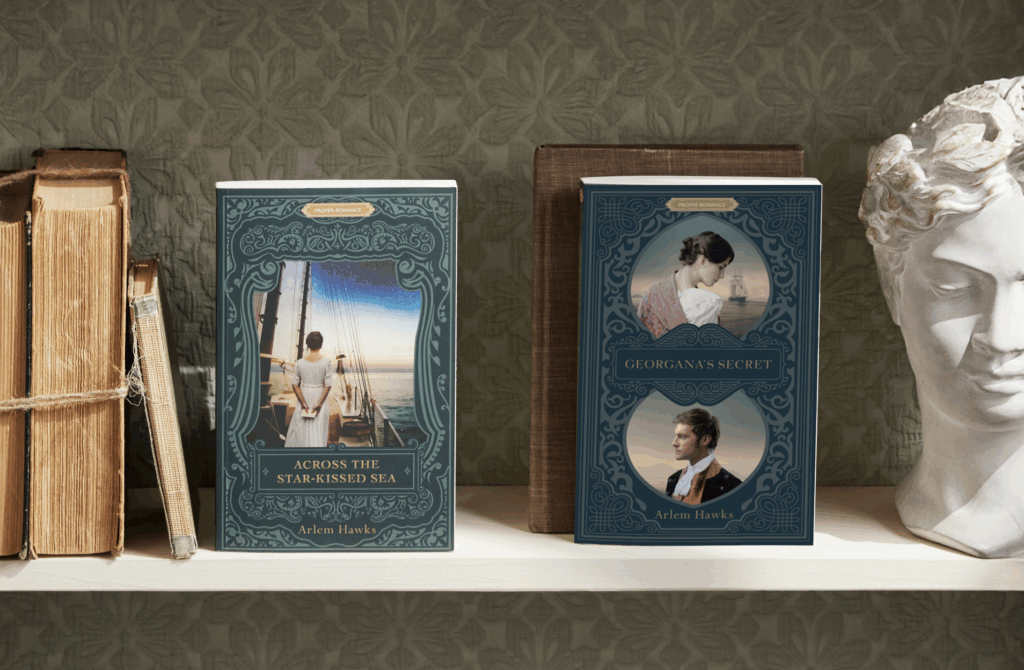
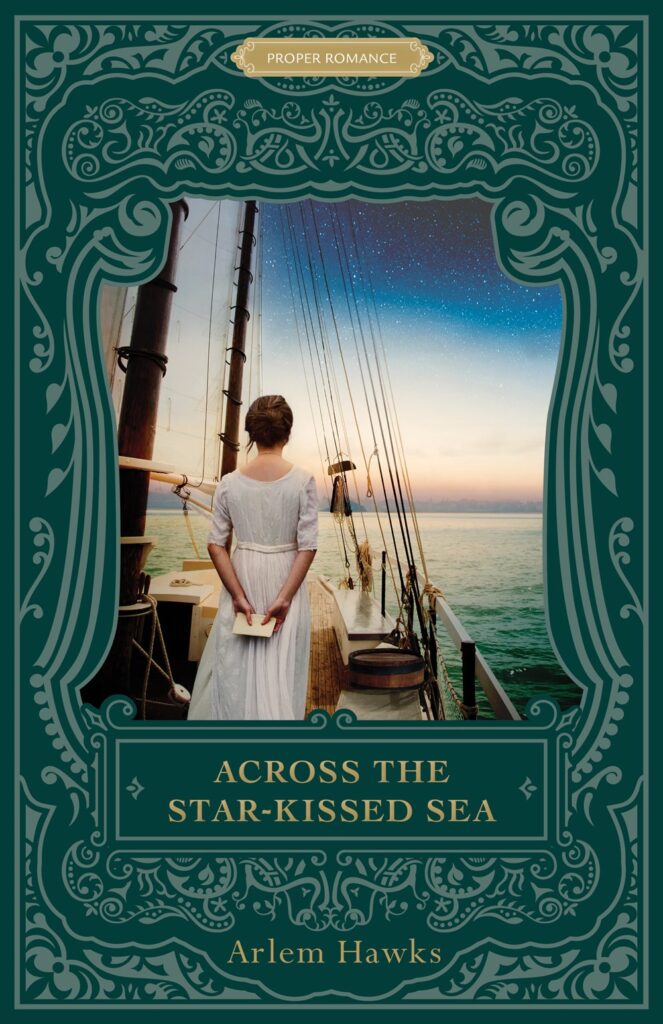
NEW! Across the Star-Kissed Sea: When May becomes a lady’s maid at sea, she’s hoping for an innocent adventure but instead must navigate rough waters, deadly combat, and unexpected love.

ARLEM HAWKS began making up stories before she could write. Living all over the western United States and traveling around the world gave her a love of cultures and people and the stories they have to tell. She has a bachelor’s degree in communications, with an emphasis in print journalism, and she lives in Arizona with her husband and three children.